
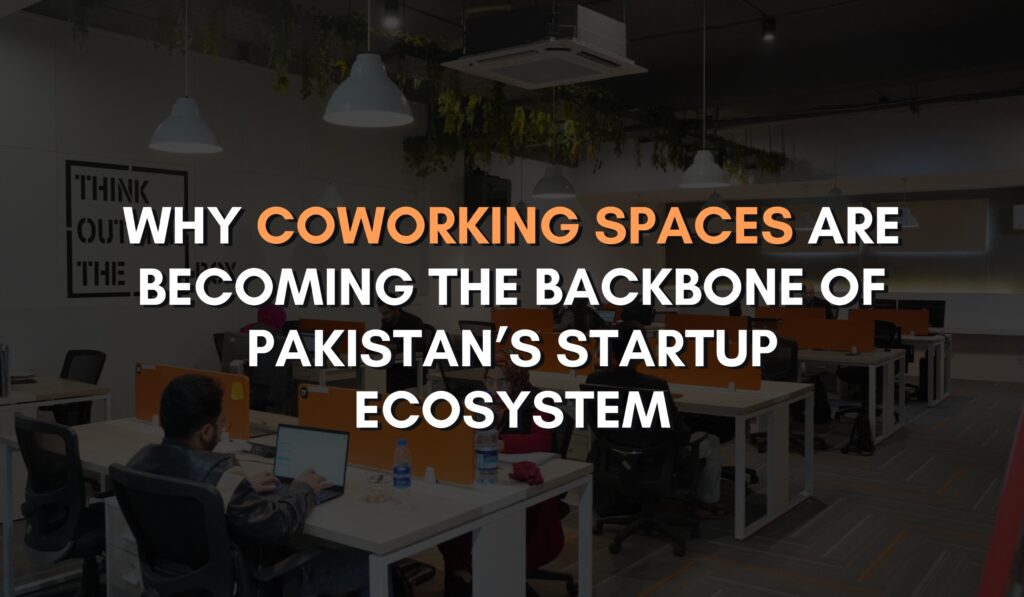
Pakistan’s startup ecosystem is evolving at a pace never seen before. From fintech and e-commerce to AI, edtech, and healthtech, a new generation of founders is redefining how businesses are built, funded, and scaled. At the heart of this transformation lies a powerful yet often underestimated force: coworking spaces.
Once viewed merely as shared offices, coworking spaces in Pakistan have grown into innovation hubs, community builders, and launchpads for startups. Today, they play a foundational role in shaping entrepreneurial success, making them the backbone of Pakistan’s startup ecosystem.
The Rise of Startups in Pakistan
Over the last decade, Pakistan has witnessed a surge in entrepreneurial activity. Young founders, freelancers, and tech professionals are choosing startups over traditional career paths. Several factors have fueled this growth:
- Increased internet and smartphone penetration
- A growing freelance and remote workforce
- Rising interest from local and international investors
- Government and private-sector initiatives supporting innovation
However, while ideas and talent are abundant, startups still face significant challenges, high operational costs, limited mentorship, lack of investor access, and isolation. This is where coworking spaces step in.
Coworking Spaces: More Than Just Offices
Modern coworking spaces are no longer about desks and Wi-Fi. In Pakistan, they have evolved into ecosystems that support startup growth at every stage.
From idea validation to scaling, coworking spaces provide startups with:
- Flexible work environments
- Access to like-minded founders and professionals
- Networking opportunities with investors and mentors
- Exposure to events, workshops, and industry leaders
This shift has positioned coworking spaces as startup enablers, not just service providers.
Lower Barriers, Higher Opportunities
One of the biggest reasons coworking spaces are thriving in Pakistan’s startup ecosystem is affordability.
Traditional office spaces demand:
- Long-term leases
- High security deposits
- Maintenance and utility costs
For early-stage startups, these expenses can be crippling. Coworking spaces remove these barriers by offering:
- Flexible membership plans
- Plug-and-play infrastructure
- Scalable options as teams grow
This cost efficiency allows founders to focus resources on product development, hiring, and customer acquisition, rather than overheads.
Community: The Real Competitive Advantage
Startups do not thrive in isolation. One of the strongest advantages of coworking spaces is the community-driven environment they create.
Within these shared spaces:
- A fintech founder might collaborate with a UI/UX designer
- A SaaS startup may connect with a growth marketer
- Early-stage founders gain insights from those who have already scaled
These organic interactions often lead to partnerships, hiring opportunities, and even funding conversations.
In Pakistan, where access to structured mentorship is limited, coworking communities act as informal accelerators, offering peer-to-peer learning that is practical and experience-based.
Coworking Spaces as Talent Magnets
Talent is the lifeblood of startups. Coworking spaces naturally attract:
- Developers
- Designers
- Marketers
- Freelancers
- AI and data professionals
This concentration of skilled individuals makes coworking spaces ideal environments for startups looking to build strong teams quickly.
For young professionals, coworking spaces offer:
- Exposure to multiple startups and industries
- Opportunities to work on real-world problems
- A dynamic alternative to corporate culture
As a result, coworking spaces play a critical role in bridging the talent gap within Pakistan’s startup ecosystem.
Investor Access and Visibility
Investors don’t just invest in ideas, they invest in ecosystems. Startups operating from recognized coworking and innovation hubs often enjoy greater visibility and credibility.
Why?
- Investors know coworking spaces vet their communities
- Demo days, pitch sessions, and networking events are hosted regularly
- Accelerators and incubators often collaborate with coworking hubs
For startups, this proximity to capital can be a game-changer. For investors, coworking spaces act as deal-flow hubs, bringing promising startups under one roof.
Supporting the Hybrid and Remote Work Model
The global shift towards hybrid and remote work has further accelerated the relevance of coworking spaces in Pakistan.
Many startups now operate with:
- Distributed teams
- Remote developers and freelancers
- Flexible work hours
Coworking spaces offer the perfect balance, professional environments without rigid structures. Teams can:
- Meet clients professionally
- Collaborate in person when needed
- Maintain flexibility without losing productivity
This adaptability aligns perfectly with the modern startup mindset.
The Role of Innovation Hubs Like InnoVista
Innovation hubs take the coworking model a step further. They integrate:
- Skill development programs
- Startup mentorship
- Industry-academia collaboration
- Access to policymakers and corporate partners
At InnoVista, coworking is not just about space, it’s about building a future-ready startup ecosystem. By connecting startups with:
- Emerging technologies like AI and automation
- Investors and industry leaders
- Learning opportunities aligned with market needs
Innovation hubs ensure that startups are not only launched, but sustained and scaled.
Driving Economic Growth and Job Creation
Coworking spaces indirectly contribute to economic development by:
- Enabling new businesses to launch faster
- Supporting freelancers and solopreneurs
- Creating employment opportunities
As startups grow, they hire locally, pay taxes, and contribute to innovation-led economic growth. In this way, coworking spaces become engines of economic resilience, especially in developing markets like Pakistan.
The Future of Coworking in Pakistan
Looking ahead, coworking spaces in Pakistan are expected to:
- Integrate AI-powered work tools
- Offer sector-specific hubs (fintech, healthtech, edtech)
- Collaborate more closely with universities and corporates
- Act as gateways to global startup ecosystems
As competition increases, the most successful coworking spaces will be those that prioritize community, learning, and opportunity, not just square footage.
Conclusion: The Backbone of a Growing Ecosystem
Coworking spaces have quietly transformed Pakistan’s startup landscape. By lowering barriers, fostering collaboration, attracting talent, and connecting startups to capital, they have become indispensable pillars of the ecosystem.
As Pakistan continues its journey toward becoming a regional innovation hub, coworking spaces, and innovation-driven platforms like InnoVista, will remain at the center of this transformation.
They are not just places where startups work.
They are places where ideas meet execution, and ambition turns into impact.